
Ditching Gendered Christianity
"Men of Virtue"? Or People of Virtue?

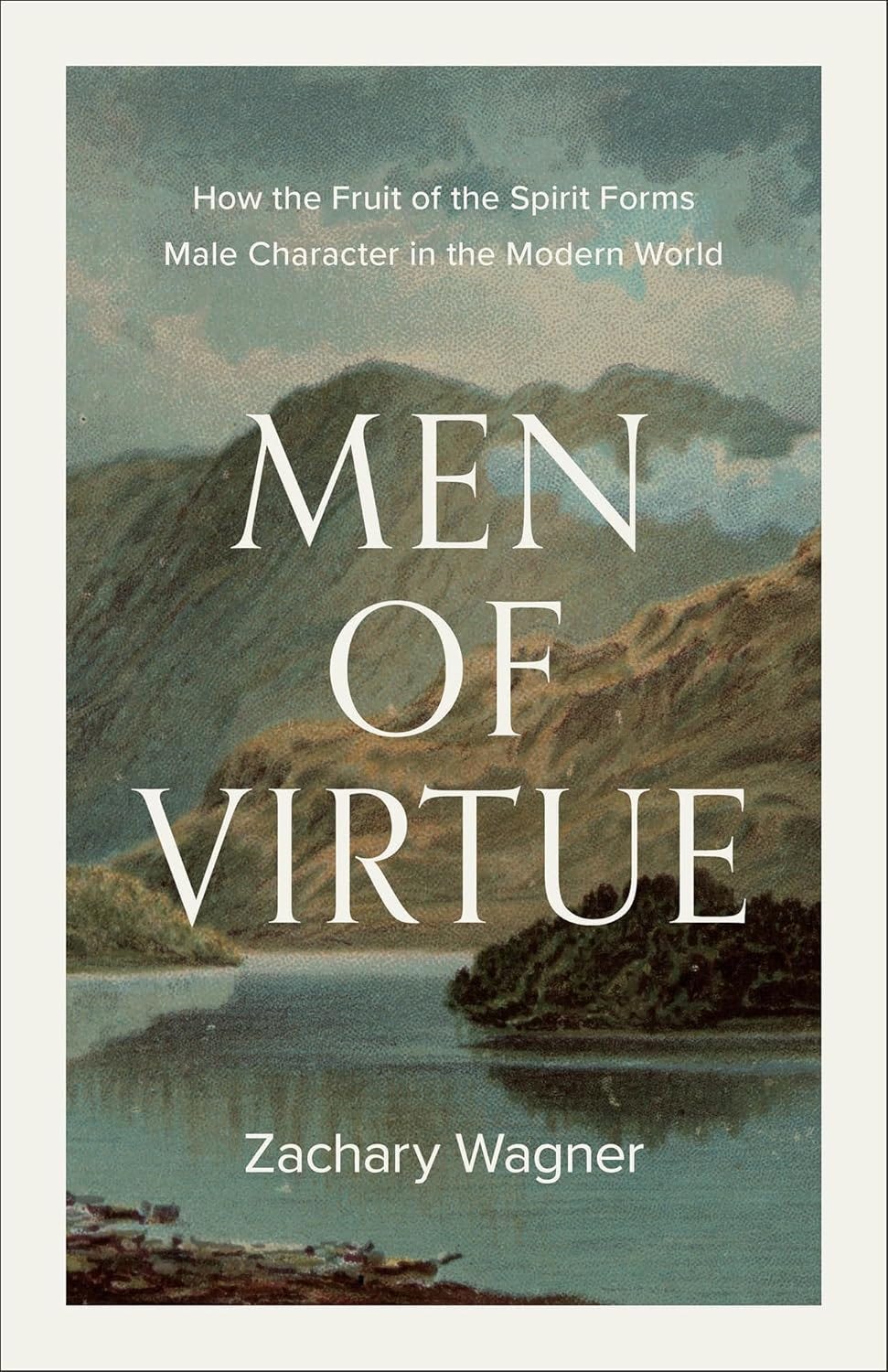
The recent Christian book Men of Virtue by Zachary Wagner offers a powerful corrective for specific audiences:
the young Christian man seeking guidance for his life;
the Christian man deconstructing complementarianism and gender hierarchy; or
the Christian man questioning the “muscular” Christianity often promoted today.
Summary
Wagner argues that men are NOT called by God, or the bible, to be more “manly.” Rather, men and women are called to become ever more like Jesus Christ.
What does it mean to become more Christ-like? Wagner points to the “fruits of the spirit” that Paul lists in Galatians 5:22-23. Then he uses Paul’s list as a framework for discussing the formation of male virtue.
Wagner says that men experience the world in a distinct way due to being embodied as males. Therefore, they develop and practice the “fruits of the spirit” in distinctly male ways.
Gentleness, for instance, is important for men to cultivate since their greater physical strength (on average) means they could cause real harm to women or children.
Kindness, for another example, may be hard for some men to cultivate because empathy may not come naturally to them.
Cultivating virtue, Wagner argues, is the essential task of (hu)manhood.
The Tension in Wagner’s Book
There’s a strange tension in Men of Virtue.
Wagner sets up his discussion of male virtue formation by arguing—correctly—that men don’t need to be more manly; they need to be more Christ-like.
And if that’s true (it is), then there is nothing “gendered” about the fruits of the spirit or the formation of virtue.
Wagner intends (I think) to open his male readers’ minds to the necessity of cultivating virtues typically considered “feminine,” such as gentleness and kindness. He wants them to nurture all the spirit’s fruits rather than shrug off some as beyond their natural male aptitude.
Yet Wagner also suggests that males experience the world and cultivate virtue differently than women because of their male embodiment.
That idea can easily collapse into “gendering” the fruits of the spirit as well as essentializing men and women (“all men are X, all women are Y”).
So, Wagner opens the door to the outcome he wants to avoid: readers concluding that men practice virtues this way while women practice them that way. It’s just nature. Can’t fight it.
In that train of thought, it’s just a short ride to strict gender roles and hierarchy.
Resolving the Tension
There’s something intuitive about Wagner’s claim that male embodiment shapes the formation of male virtue.
But for every example Wagner gives, and that I can imagine, of a male body influencing how one nurture the spirit’s fruits, I can also imagine women doing the same things.
Lacking gentleness, kindness, or empathy, in my experience, tends to depend on the situation, not gender. A person who displays these traits in one situation might fail to practice them in another.
Women’s exclusion from high-risk professions says more about systemic sexism than essential gender differences. Threaten her child and any woman will display plenty of aggression and risk-taking.
Ultimately, I think we have to stop gendering characteristics all-together. We have to stick with Wagner’s initial argument that men and women alike should strive to become more Christ-like. Period.
But what about the observable differences between men and women, both individually and in the aggregate? We should attribute those differences to the social construction of gender rather than anything innate to male or female embodiment.
Wagner doesn’t ignore the social construction of gender, but he frames it as an influence rather than a determinant.
I’m sympathetic to his framing. I also resist saying that social influences determine gender traits, because such thinking risks stagnating people’s character. It can create a sense of fatalism about how one is.
Yet it’s more correct to view individual and aggregate gender differences as the result of social influences than the inevitable result of differing physical embodiment.
If men are more risk-taking, for instance, it’s because adults don’t tell little boys to be careful as often as they caution little girls. Boys even get praised for being wild!
If the difference were physical embodiment—being “big” in the world, so to speak—then we’d see more risk-taking in girls when they start puberty and grow to be larger than their male peers. If the difference were testerone, then we would see equal amounts of risk-taking in girls and boys until the latter get well into puberty.
Final Thoughts
As I say in the beginning of this post, Zachary Wagner’s book is perfect for certain audiences. I would much rather a young man seeking guidance read Wagner’s argument for virtue formation than a complementarian’s screed against feminism.
But for other audiences, I think the tension in Wagner’s book leaves them … wondering where we go from here.
For me, I’m more convinced than ever that any language “gendering” traits, especially virtues, risks “essentializing” men and women, which easily generates and justifies specific gender roles, which can solidify into a strict gender hierarchy. Therefore, we should “degender” the spirit’s fruits and the pursuit of Christ-likeness.
Wagner begins on that path, but then he veers off because he wants to also acknowledge general differences between men and women without fully embracing the social construction of those differences.
We should acknowledge the observable differences between men and women both individually and in the aggregate, but we should frame those differences as socially influenced rather than innate traits resulting from physical differences.
Otherwise, we circle back into “gendering” traits, essentialism, and hierarchy.
Are you saying the physical differences between men and women make no difference at all? Social constructs play a huge part, but I am not sure the physical differences don't make a huge impact as well. You do have me wanting to read Wagner's book, and I appreciate the well-thought out review.